Why Meriwether County Businesses Should Check the Front Door Before Spending More on Marketing
Most business owners know the feeling.
The phone is not ringing enough.
The form is not bringing in enough requests.
The Facebook messages feel random.
The website is there, but it is hard to know if it is really helping.
So the first thought is usually simple:
We need more marketing.
Sometimes that is true.
But for many local businesses, the first problem is not attention. The first problem is what happens after a customer already shows interest.
That is the front door.
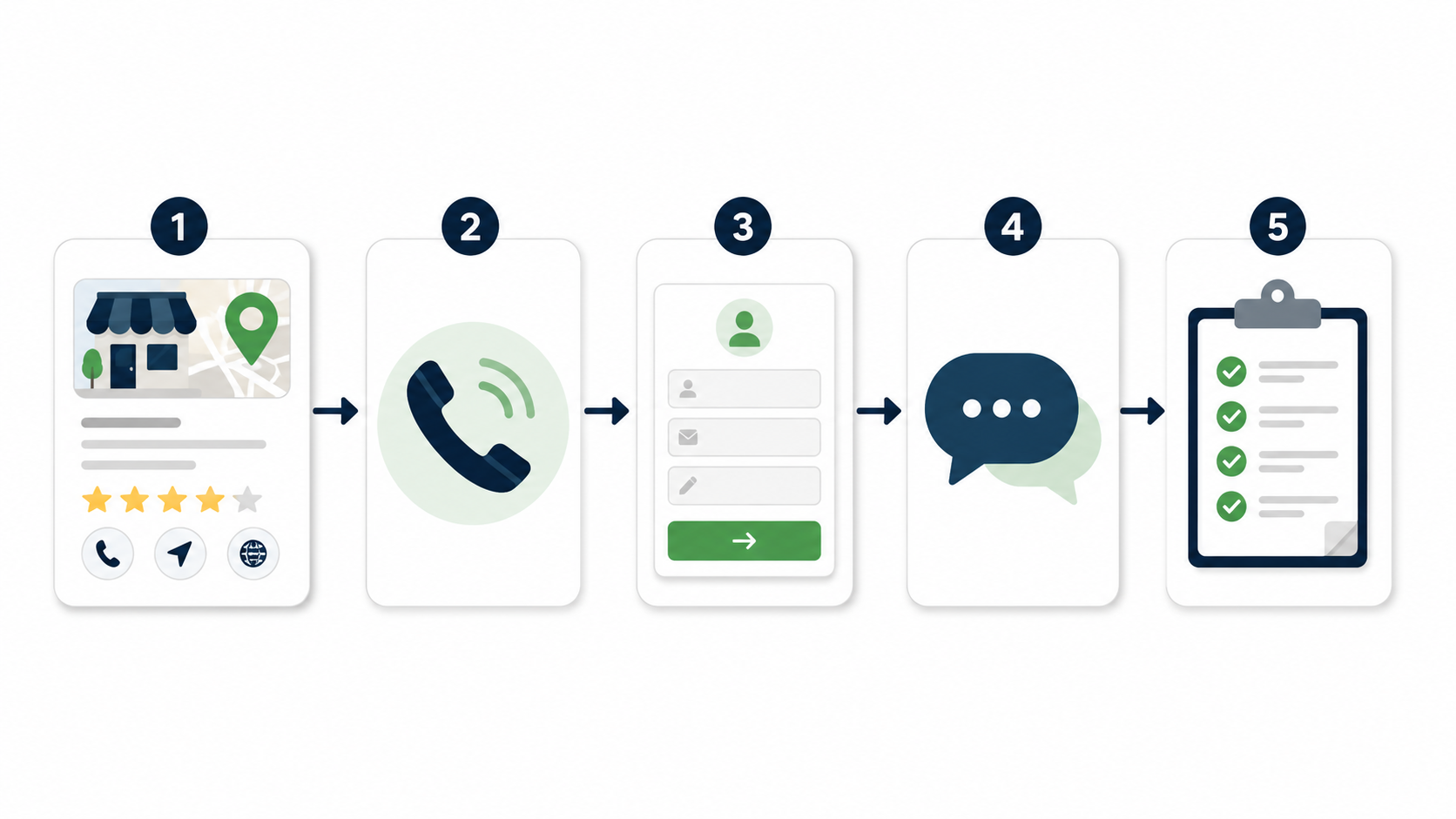
For a Meriwether County business, the front door is not just the physical door people walk through. It is also the Google listing, website, phone number, contact form, Facebook page, text message, estimate process, and follow-up path.
If those parts are unclear, slow, or scattered, local customer interest can lose momentum before it turns into a real conversation.
That is why it makes sense to check the front door before spending more money on marketing.
What is the front door of a local business?
The front door is the first customer experience.
It is what happens when someone tries to:
Find your business
Call your business
Submit a form
Send a message
Ask for an estimate
Check your hours
Understand your services
Decide what to do next
A customer may not tell you the front door was confusing. They may just move on.
That is the quiet problem.
The business owner may think the customer was not serious. But the customer may have been ready. They just did not get a clear enough path to continue.
Why this matters in Meriwether County
Local businesses are part of the county's strength.
When people can find and support businesses in Luthersville, Warm Springs, Manchester, Greenville, Woodbury, Gay, Lone Oak, and nearby communities, more customer activity has a chance to stay close to home.
That matters.
A clear front door helps local customers choose local businesses instead of drifting to a company outside the county.
Every returned call matters.
Every answered message matters.
Every clear form matters.
Every followed-up estimate matters.
Those small handoffs can decide whether local interest becomes local revenue.
The mistake many businesses make
Many business owners jump straight to more marketing when results feel slow.
They think:
We need more ads
We need a new website
We need more social media posts
We need another tool
We need more attention
But if calls are missed, forms are not checked, messages are scattered, or estimates do not get follow-up, more marketing may only create more missed opportunities.
More attention does not fix a broken handoff.
It can actually expose it.
That is why the first question should not be, How do we get more people to notice us?
The better first question is:
What happens after someone already tries to reach us?

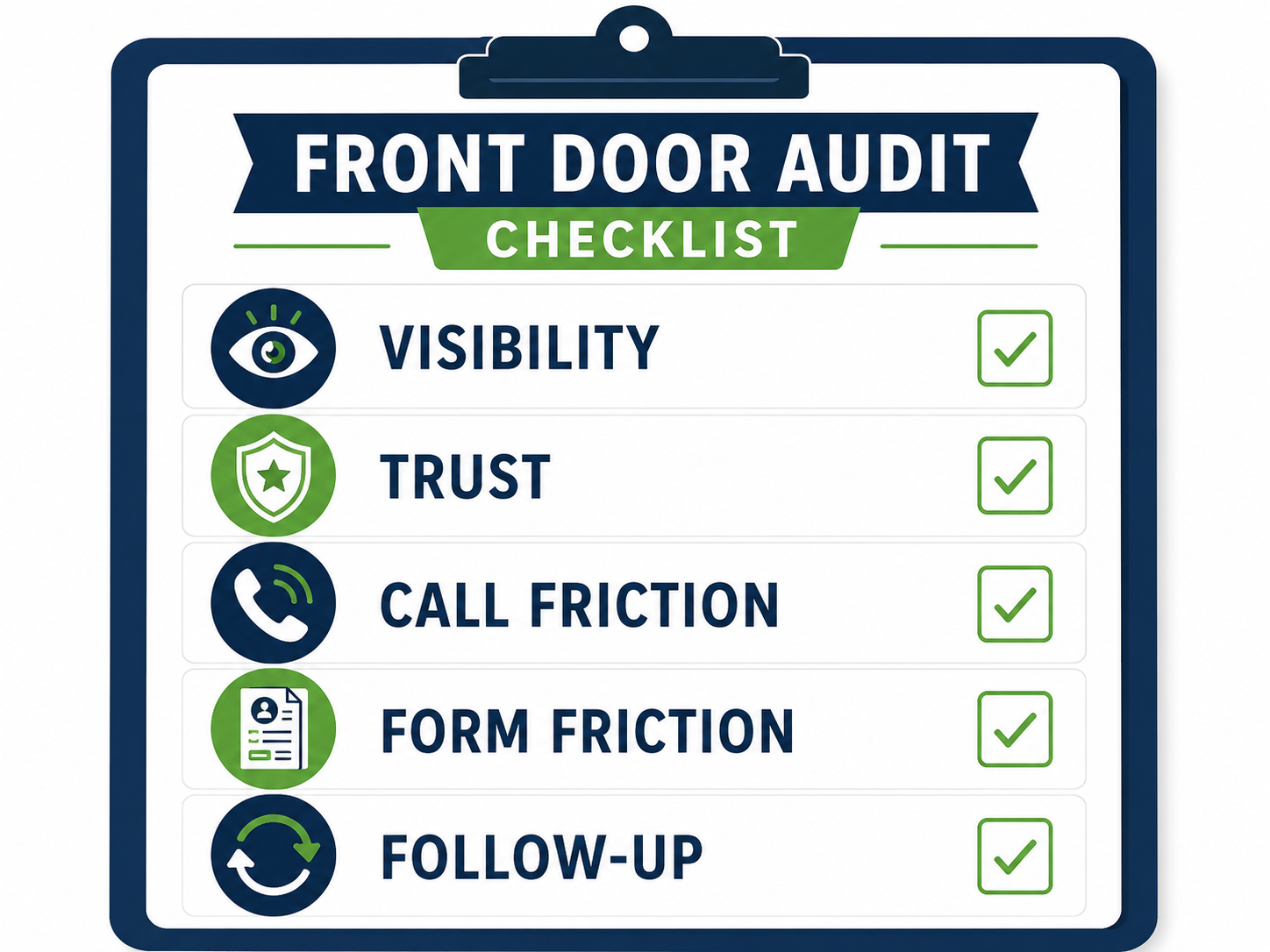
Five areas every local business should check
Before spending more money on marketing, check these five areas.
1. Visibility
Can people quickly find the right information?
Check your Google Business Profile, website, Facebook page, and any directory listings.
Look for:
Correct phone number
Correct hours
Clear services
Current photos
Simple next step
Accurate location or service area
If the information is outdated or unclear, customers may hesitate.
2. Trust
Does the business look active, real, and easy to deal with?
Trust does not come only from reviews. It also comes from clarity.
Customers want to know:
What do you do?
Who do you help?
How do they contact you?
What happens next?
Are you still active?
Can they trust you to respond?
If the answer is not clear, they may keep searching.
3. Call friction
What happens when someone calls and nobody answers?
This is one of the biggest front door questions.
A missed call is not always a lost customer. But without a callback path, it can become one.
Ask:
Does someone own missed calls?
Are voicemails checked?
Are missed calls returned quickly?
Is there a text-back option?
Do after-hours calls have a next step?
Many local businesses do good work but lose momentum because the call path is not clear.
4. Form friction
Where do contact forms go?
This sounds simple, but many businesses do not know.
A customer fills out a form and assumes someone received it. The business owner may never see it, or it may go to an inbox nobody checks daily.
Ask:
Who receives form submissions?
Are forms tested regularly?
Do forms send a confirmation?
Does someone own the reply?
How quickly does follow-up happen?
A form is only useful if it creates a real customer handoff.
5. Follow-up
Who owns the second touch?
This is where many customer opportunities go quiet.
A customer asks for an estimate. A first conversation happens. Then life gets busy. The customer waits. The business moves on. Nobody owns the next step.
Ask:
Who follows up after estimates?
How long do you wait?
Is there a simple reminder?
Are open estimates tracked?
Is there a clear close-the-loop process?
Follow-up is not pressure. Done right, it is service.
It tells the customer, We did not forget about you.
A simple self-check for Meriwether County businesses
Here are a few questions to ask before spending more on marketing:
When someone calls and you cannot answer, what happens next?
Do customer requests come into one place, or are they split between phone, Facebook, email, forms, and texts?
Who checks form submissions?
Who owns follow-up after an estimate goes quiet?
Can a customer quickly tell what to do next?
Does your Google listing match your website and social pages?
Are your hours, phone number, and services correct everywhere?
If a customer says, I reached out but never heard back, where would you check first?
If those questions are hard to answer, that does not mean the business is failing.
It means the front door needs attention.
This is not always a website rebuild problem
A website can matter.
But the website is not always the first problem.
Sometimes the first fix is much smaller:
Update the phone number
Clean up the Google listing
Test the contact form
Set up missed call follow-up
Create a simple callback process
Assign one person to messages
Add a clear next step
Track estimates that need follow-up
That is why checking the front door first is useful.
It helps the business owner avoid guessing.
The goal is stronger customer connection
The point is not to make local businesses feel behind.
The point is to make the next step clearer.
When a business is easier to find, easier to contact, easier to trust, and easier to support, customers have a better experience.
That helps the business.
It helps the customer.
And over time, it helps the local community.
Meriwether County businesses do not always need more noise.
Many need a clearer path between customer interest and customer connection.

Take the free 2-minute Front Door Audit
Work Smart Services created the Meriwether County Front Door Audit to help local businesses check the first customer handoff before spending more on marketing.
It looks at visibility, trust, call friction, form friction, and follow-up.
The audit is free and takes about 2 minutes.

